
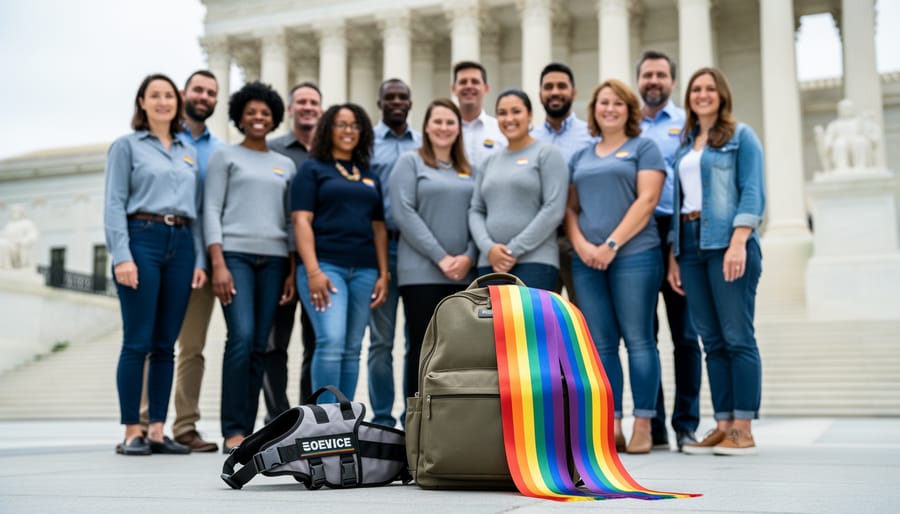
Yes, Donald Trump’s administration implemented multiple policies between 2017 and 2021 that rolled back legal protections for LGBTQ+ individuals in the United States. From banning transgender military service members to removing healthcare protections and weakening workplace discrimination safeguards, his presidency marked a documented shift away from the federal protections that had been expanding under previous administrations. These weren’t abstract political debates but concrete policy changes that affected real people’s ability to serve their country, access healthcare, and feel safe in their workplaces.
For Canadians watching American politics, these changes matter beyond borders. The same misinformation strategies used to obscure or exaggerate political records in the U.S. often migrate north, shaping conversations about rights and protections in our own communities. When we see claims circulating online about what any political leader did or didn’t do, checking the facts becomes an act of community protection. That’s why research at Canadian Pride focuses on separating documented policy changes from fear-based rumors, helping readers build the skills to evaluate claims critically rather than react emotionally.
This article walks through what actually happened during Trump’s presidency, why accurate information protects our community from manipulation, and how to spot false claims before they spread. You’ll find specific policy examples, timelines that matter, and practical tools for having informed conversations when these topics come up at family dinners or in group chats.
Understanding the Historical Record: What Actually Happened
1. Transgender Military Service Ban (2017)
In July 2017, the Trump administration announced plans to reinstate restrictions on transgender individuals serving in the U.S. military, reversing Obama-era policies that had allowed open service. The announcement came via social media before formal policy documents followed. By March 2018, the 2017 transgender service memorandum directed the Department of Defense to implement new guidelines that effectively barred most transgender recruits and imposed significant limitations on serving members.
The policy prohibited transgender individuals who required medical treatment or had transitioned from enlisting, and it restricted currently serving members from accessing transition-related healthcare through military providers. Thousands of active-duty service members faced uncertainty about their careers and medical support. The restrictions remained in place until January 2021, when they were reversed by executive order under the Biden administration.
For Canadian LGBTQ+ communities, this marked the first concrete example of how administrative policy could rapidly erode protections without legislation. The military ban demonstrated that rights secured through executive action remain vulnerable to reversal, a lesson relevant to advocacy work on both sides of the border. It also sparked cross-border solidarity efforts, as Canadian organizations supported affected service members and their families.
2. Rollback of Federal Workplace Protections (2017-2019)
In 2017, the Trump administration began dismantling federal workplace protections that had explicitly included LGBTQ+ employees. The Justice Department reversed its long-held interpretation of Title VII of the Civil Rights Act, arguing that the law’s prohibition of sex discrimination did not extend to discrimination based on sexual orientation. This shift removed federal backing for LGBTQ+ workers facing workplace discrimination in states without their own protections.
Simultaneously, the administration rolled back Obama-era rules requiring federal contractors to document their non-discrimination efforts for LGBTQ+ employees. By removing these explicit protections from federal contracting requirements, the changes signaled that businesses working with the government no longer needed to demonstrate LGBTQ+-inclusive employment practices.
The effects were immediate for workers in the private sector and federal contracting spaces. Without federal enforcement mechanisms, employees in states lacking comprehensive anti-discrimination laws found themselves with fewer avenues to challenge unfair treatment based on sexual orientation or gender identity. The policy shift created a patchwork of protections across the country, leaving workers’ rights dependent on where they lived and worked.
For Canadian communities watching these developments, the workplace protections rollback illustrated how administrative actions, not just legislation, can erode rights. Understanding these mechanisms helps Canadian advocates recognize similar tactics and strengthens cross-border solidarity in protecting employment equality for 2SLGBTQI+ workers.
3. Healthcare and Religious Exemption Rules (2019-2020)
In 2019 and 2020, the U.S. Department of Health and Human Services introduced rules that significantly altered healthcare protections for LGBTQ+ individuals. The HHS religious freedom final rule expanded conscience protections for healthcare workers and institutions, allowing providers to refuse care based on religious or moral objections without fear of federal funding consequences. This meant doctors, nurses, and hospitals could legally decline to treat LGBTQ+ patients or provide specific services like hormone therapy or fertility treatments.
Simultaneously, HHS removed explicit non-discrimination protections for LGBTQ+ people from Affordable Care Act regulations. The 2020 rule change eliminated language that had protected transgender patients from discrimination in healthcare settings, arguing that the term “sex” in federal law referred only to biological sex assigned at birth. Healthcare facilities that previously couldn’t deny care based on gender identity or sexual orientation gained legal grounds to do so.
For transgender individuals, these changes created real barriers: emergency room refusals, cancelled surgeries, and therapists terminating treatment. The rules didn’t outright ban LGBTQ+ healthcare, but they removed federal accountability for providers who chose to discriminate, leaving enforcement to inconsistent state laws and individual lawsuits.
4. Restrictions on Federal Recognition and Data Collection (2018-2020)
Between 2018 and 2020, the Trump administration made several administrative changes affecting how the federal government recognized and tracked LGBTQ+ populations. These shifts were less visible than policy rollbacks but had meaningful implications for data transparency and symbolic representation.
In 2018, the Department of Health and Human Services removed questions about sexual orientation and gender identity from planned surveys on elderly care, making it harder to identify and address health disparities facing LGBTQ+ seniors. The Census Bureau similarly declined to add LGBTQ+ questions to the 2020 census despite advocacy from researchers and community organizations who argued that population data drives resource allocation and civil rights enforcement.
The State Department changed its flag policy in 2019, instructing U.S. embassies to seek authorization before flying Pride flags on official poles during Pride month. While some embassies found workarounds, the shift marked a departure from the Obama-era practice of encouraging visible LGBTQ+ solidarity at diplomatic posts worldwide.
These administrative changes reflected a broader pattern: even where no law changed, federal agencies reduced LGBTQ+ visibility in government processes. For Canadian communities connected to cross-border family networks or watching U.S. policy trends, these shifts illustrated how administrative discretion can quietly erode recognition without formal legislation. The cumulative effect was a federal government that collected less data about LGBTQ+ populations and provided fewer visible signals of inclusion.
Why This Matters for Canadian 2SLGBTQI+ Communities

Understanding why U.S. policy debates matter to Canadian 2SLGBTQI+ communities starts with recognizing how interconnected our advocacy networks and daily lives truly are. Cross-border families, where partners, spouses or children live on opposite sides of the border, face direct consequences when either country restricts rights or creates hostile policy environments. Immigration processes, healthcare coverage for trans family members, and even the ability to visit loved ones safely all hinge on the legal protections each jurisdiction offers.
Beyond personal connections, the rhetoric and policy strategies that shaped U.S. debates during 2017-2021 have demonstrably crossed into Canadian discourse. Politicians, advocacy groups and media figures often import talking points about transgender rights, religious exemptions and “parental rights” directly from American playbooks. When misinformation circulates unchecked about what actually happened in the United States, it provides cover for similar proposals here, making it harder for Canadian 2SLGBTQI+ people to defend the protections we’ve built through decades of advocacy.
The ripple effects also touch employment and workplace safety. Canadian employers with U.S. operations, cross-border professional networks, and industry associations watch American policy shifts closely, sometimes using them to justify reduced protections or reluctance to expand inclusive practices affecting work experiences in Canada. Fact-based solidarity strengthens our community’s ability to push back against these imports, protecting the gains we’ve made while supporting our American counterparts. Understanding the verified record, not viral claims, equips us to counter misinformation wherever it emerges.

Spotting and Countering Misinformation
When misinformation targets LGBTQ+ rights, knowing how to verify claims protects our community from fear tactics and strengthens fact-based advocacy. Canadian Pride community members and allies can use practical strategies to separate documented policy changes from inflammatory rhetoric or fabricated scenarios.
Start by checking primary sources. Official government documents, executive orders, and agency announcements provide the actual text of policy changes rather than interpretation. When you see a claim about rights being “taken away,” ask: Is there a specific order, regulation, or law cited? Congressional records, Federal Register entries, and official agency websites document what actually changed and when.
Look for contemporaneous reporting from established news organizations. Claims about policy shifts should appear in multiple credible outlets at the time the change occurred, not surfacing years later or only in social media posts. Compare coverage across sources to distinguish verified actions from speculation.
Here’s how to evaluate LGBTQ+ policy claims systematically:
- Verify the source: Check if official government documents or established news outlets reported the claimed policy change
- Look for dates and specifics: Real policy changes have implementation dates, order numbers, and documented procedures
- Distinguish administrative actions from legislation: Executive orders, agency rules, and laws have different scopes and durability
- Consult trusted advocacy organizations: Groups like Egale Canada, GLSEN, and Lambda Legal track verified policy developments
- Ask whether the claim matches the timeline: Be skeptical of assertions about “current” changes that lack recent documentation
Understanding policy versus rhetoric matters enormously. Politicians make many statements that don’t translate into actual legal changes. An offensive comment or campaign promise isn’t the same as a signed executive order or passed law, though both deserve scrutiny.
Canadian communities can apply the same critical thinking to domestic misinformation. The tactics used to spread false claims about U.S. policies, cherry-picked quotes, misleading headlines, fabricated timelines, appear in Canadian contexts too, particularly around issues like debunking trans youth myths where misinformation proliferates.
When community members encounter scary claims, respond with facts rather than panic. Share verified information from trusted sources and help others develop the skills to counter hate and misinformation. Building community resilience through media literacy protects vulnerable members from targeted fear campaigns.
What to Watch and How to Stay Informed

Staying informed requires building habits that serve you year-round, not just during election cycles or breaking news moments. Follow established LGBTQ+ advocacy organizations in both countries, groups like Egale Canada and Lambda Legal publish detailed policy analyses when changes actually occur, rather than reacting to every social media claim. Sign up for email newsletters from these organizations so verified updates reach you directly.
Check the source and date on any alarming headline before sharing it. A 2017 policy change doesn’t become news again in 2026 just because someone reposted it with urgent language. When you see claims about rights being removed, look for the official government document, the court filing, or the legislative text, not just commentary about it. Canadian news outlets with dedicated LGBTQ+ beats often provide context that pure U.S. sources miss, explaining how American developments might influence Canadian discourse.
Community education matters as much as individual vigilance. Organize know-your-rights workshops that cover both countries’ legal frameworks, so people understand what protections exist and where gaps remain. When misinformation spreads in your networks, respond with specific corrections and links to primary sources rather than general skepticism. Building this collective literacy makes entire communities harder to manipulate.
Create a personal list of three to five trusted sources you’ll consult before accepting a major claim as fact. This simple habit, pausing to verify rather than immediately reacting, protects you and everyone you might otherwise share unverified information with. The goal isn’t constant alarm but informed, strategic attention to real developments when they happen.
Frequently Asked Questions
Did Trump remove all LGBTQ+ protections in the United States?
No. While his administration reversed specific federal protections and workplace policies between 2017 and 2021, fundamental legal rights like marriage equality remained intact, and many state-level protections continued unchanged.
Are LGBTQ+ rights still protected in Canada?
Yes. Canadian Charter protections for 2SLGBTQI+ individuals remain robust and independent of U.S. policy changes. Our federal and provincial human rights frameworks continue to safeguard against discrimination in employment, housing, and services.
Why should Canadians care about U.S. LGBTQ+ policy changes?
Cross-border families face direct impacts, and rhetoric from U.S. political debates often influences Canadian discourse. Understanding the facts helps our community counter misinformation attempts here at home and support advocacy networks that span both countries.
Where can I find verified information about LGBTQ+ policy changes?
Stick to established LGBTQ+ advocacy organizations like Egale Canada and GLAAD, government policy archives, and fact-checking services like Snopes or PolitiFact. Always check publication dates and cross-reference claims with multiple trusted sources before sharing.
How can I respond when someone shares misinformation about LGBTQ+ rights?
Lead with documented facts rather than emotion, share links to verified sources, and gently correct specific inaccuracies. Focus on what actually happened with dates and policy names, then redirect the conversation toward accurate information and community support.
These questions reflect what Canadian Pride community members genuinely ask when confronted with confusing or misleading claims about policy shifts south of the border. Knowing the factual answers empowers you to educate others, spot manipulation tactics, and maintain confidence in our own protected rights. The goal isn’t winning arguments but building a community culture where truth matters and everyone can access reliable information quickly.