
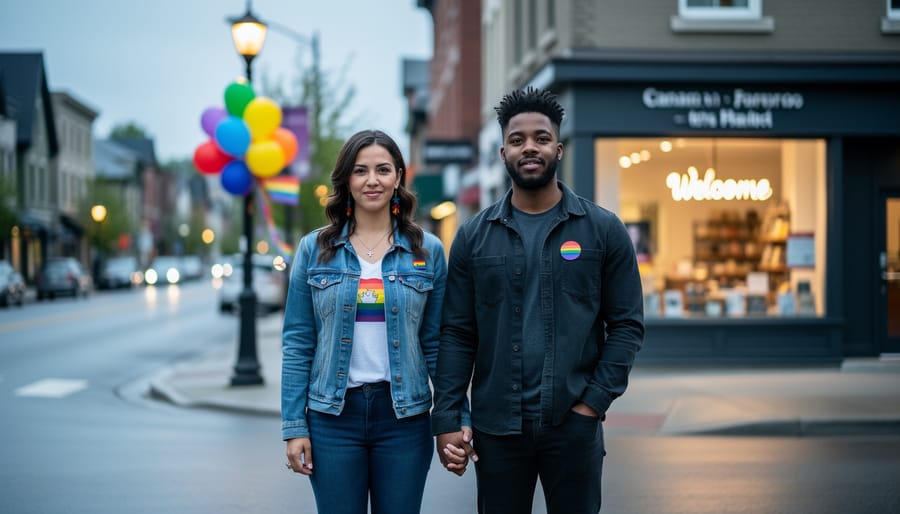
Love stories from across Canada’s LGBTQ+ community reveal a truth more powerful than any single narrative: the experience of finding and building love is as diverse as the people who live it. These aren’t fairy tales or carefully curated highlights. They’re real accounts from couples navigating first dates and decades-long partnerships, from individuals who found acceptance in unexpected places and those still working toward it, from relationships that defy easy categories and families built in countless beautiful ways.
What makes these stories matter goes beyond inspiration. When a trans woman in Halifax shares how her partner stood beside her through transition, or when a two-spirit elder in Saskatchewan recounts 40 years with their spouse, these narratives create a living map of possibility. They answer questions before they’re asked. They show younger LGBTQ+ Canadians what thriving looks like. They remind those feeling isolated that their story isn’t happening in a vacuum.
The couples you’ll meet here span generations, provinces, and identities. Some came out in eras when doing so meant genuine risk. Others grew up with language and community support their predecessors fought to create. What connects them isn’t a single path to happiness but rather the courage to claim love on their own terms and the resilience required to protect it.
These stories also illuminate something essential about Canadian LGBTQ+ life in 2026: while legal rights have expanded dramatically, the emotional journey toward acceptance, both external and internal, remains deeply personal. Family dynamics shift. Communities evolve. And through it all, love persists, adapts, and teaches us what we most need to know about ourselves and each other.
Coast to Coast: Love Across Canadian Communities

Finding Each Other in Unexpected Places
Sometimes the most beautiful connections happen when you least expect them. Take Marcus and Julian from Toronto, who locked eyes across a crowded volunteer shift at their neighbourhood community center. What started as casual conversation over sorting donation boxes turned into late-night coffee runs and, eventually, a partnership that’s now in its fourth year. “I wasn’t looking for anything that day,” Marcus laughs. “I was just trying to help out.”
For Sam and River in Halifax, activism brought them together during a local rally for trans rights in 2023. They bonded over shared protest signs and discovered a connection that went far beyond their advocacy work. “We joke that fighting for justice together prepared us to face anything as a couple,” River says.
The pandemic created unexpected opportunities for connection too. When in-person meetups weren’t possible, Alex from Winnipeg and Jordan from Brandon matched on a dating app and spent months getting to know each other through video calls before their first actual date. “We built our foundation on conversation,” Alex explains. “By the time we met face-to-face, it really did feel like love at first sight.”
Shared hobbies spark romance too. Emma and Claire connected through a queer book club in Victoria, while Derek and Adrian met at a board game night in Edmonton. When Tasha and Michelle crossed paths at Pride 2025 in Vancouver, they discovered they’d been following each other online for months without realizing they lived in the same city.
These stories remind us that love finds a way, often when we’re simply showing up as ourselves.
Building Lives Together Against the Odds
Marcus and Diane didn’t expect their families to celebrate their engagement. When Marcus, a second-generation Chinese Canadian from Richmond, came out as trans in his thirties, his parents stopped speaking to him for two years. Diane’s evangelical family in rural Saskatchewan didn’t fare much better when she brought home her first girlfriend. When they found each other at a queer community potluck in Vancouver thirteen years ago, both understood what it meant to build a life without the safety net most couples take for granted.
They created their own traditions. Sunday dinners with chosen family, friends who’d become siblings, mentors who’d become parents. A small apartment that felt like a sanctuary. Jobs that let them be themselves without hiding. Hate crimes persist in Canada and they’ve faced their share, slurs shouted from passing cars, a landlord who suddenly “changed his mind” after meeting them. But they kept building.
Last year, Marcus’s mother showed up unannounced at their door. She’d been watching from a distance, seeing the life they’d created, and finally understood what she’d been missing. She stayed for tea, then dinner, then became a regular fixture at those Sunday gatherings.
Theirs isn’t a fairy tale ending where everything gets fixed. Diane’s family still won’t acknowledge their marriage. Money stays tight. Some days are harder than others. But they’ve built something that matters, a home filled with laughter, a circle of people who show up, and a partnership that’s outlasted every obstacle thrown at it. That’s the kind of love that doesn’t just survive, it rewrites the rules.
Love in All Its Forms: Beyond the Binary
Love refuses to fit neatly into boxes, and the relationships thriving across Canada’s LGBTQ+ community prove it beautifully. These are stories that expand our understanding of partnership, commitment, and connection.
Take Ash and River, a non-binary couple from Halifax who met at a mutual aid collective during the pandemic. Their relationship exists outside traditional gender dynamics entirely. “People always ask who does what,” River laughs. “We just… do life together. There’s no script we’re following.” They’ve built a home where gender presentation shifts day to day, where neither partner occupies a predetermined role, and where love simply means showing up authentically for each other.
In Ottawa, Marcus and Jenna’s love story challenges assumptions in a different way. Marcus, a trans man, and Jenna, a cis woman, face constant questions about their relationship’s legitimacy. Strangers sometimes misgender Marcus or suggest their partnership is “just straight.” But their bond, forged through Marcus’s transition and strengthened by Jenna’s unwavering support, represents a deeply queer experience of love. They’ve navigated medical gatekeeping together, celebrated milestones that cisgender couples never consider, and created a relationship built on profound mutual understanding.
Polyamorous relationships add another dimension to this rich landscape. Sarah, Dani, and Chris, a Vancouver-based triad, have been together for six years. Their relationship requires intentional communication that monogamous couples might never develop. “We had to create our own relationship agreements from scratch,” Sarah explains. “There was no blueprint for three people building a life together.” They’ve faced legal challenges around housing and healthcare, yet their chosen family structure provides them with multiple sources of support, different perspectives, and a love that multiplies rather than divides.
Then there’s the story of Kai and Devon from Winnipeg, who describe their partnership as queerplatonic. They’re committed life partners who aren’t romantically or sexually involved, yet share finances, make major decisions together, and consider each other primary. Their relationship dismantles the hierarchy that places romantic love above all other connections.
These stories aren’t exceptions or edge cases. They’re part of the full spectrum of how love manifests when people are free to define it for themselves. Each challenges the narrow narratives we’ve inherited while demonstrating that acceptance means celebrating love in whatever form it genuinely takes.
Generations of Love: Stories Across Age and Time

Love That Paved the Way
When Canada decriminalized homosexuality in 1969, many couples were already years into relationships they’d hidden from neighbors, employers, and even family. Meet Harold and James, who’ve shared a home in Halifax for 47 years. They introduced each other as roommates well into the 2000s, protecting careers and avoiding violence. Their anniversary dinners happened behind closed curtains, their love expressed in quiet gestures rather than public declarations.
In rural Alberta, Margaret and Susan bought a farm in 1978, letting locals assume they were simply spinster friends working the land together. They raised sheep, built a life, and never corrected the assumptions. It wasn’t until their neighbor’s granddaughter came out in 2015 that they quietly shared their truth with her, offering decades of wisdom about sustaining love when the world won’t acknowledge it.
These couples didn’t have Pride parades or legal recognition. They created their own rituals, their own language for commitment. What they built, stable partnerships lasting decades without social support or legal protection, laid groundwork that made today’s openness possible. Their persistence proved LGBTQ+ relationships could thrive even when society refused to see them, giving younger generations both a foundation and a reminder that love has always been worth the risk.
Love in a New Era
Twenty-four-year-old Alex and Jordan matched on a dating app while both were volunteering with their local Pride organization in Halifax. “We put our pronouns right in our bios, no hiding, no testing the waters first,” Alex explains. Their first date happened at a coffee shop owned by one of many LGBT-supporting companies in their neighborhood, where rainbow flags weren’t performative but genuine. This generation inherited hard-won freedoms their elders fought for, yet they’re not resting on that progress.
Public opinion shifted over time creating space for younger LGBTQ+ Canadians to approach relationships with less fear than previous generations faced. They’re using that space boldly. Trans woman Maya and her girlfriend Sophie, both in their early twenties, post couple photos without second-guessing. Non-binary partners like Sam navigate polyamory openly with their two partners in Toronto, challenging relationship structures their parents never imagined discussing.
But acceptance isn’t uniform. Rural couples still face stares. Some families withdraw support after the initial coming-out acceptance fades when relationships become real. These younger lovers balance gratitude for progress with impatience for what’s still lacking, pushing conversations forward while building the loving, authentic partnerships they deserve.
When Families Become Allies: Stories of Acceptance
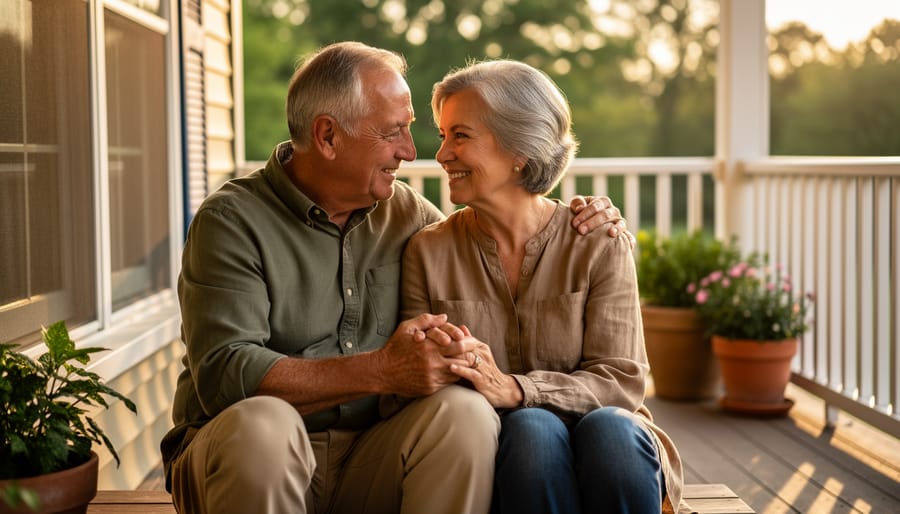
When Sarah and Jennifer got engaged in Calgary, Sarah’s parents initially refused to attend the wedding. Two years later, those same parents now proudly display their wedding photos and have become vocal supporters of LGBTQ+ rights at their church. Their transformation, though gradual, represents a journey many families across Canada have traveled from uncertainty to unconditional love.
Marcus from Halifax remembers the silence that followed when he introduced his boyfriend to his Caribbean immigrant parents. His mother couldn’t reconcile her faith with her son’s relationship. The turning point came when Marcus’s partner rushed to the hospital during his father’s heart attack, sitting with the family through surgery and recovery. His mother later told Marcus, “I finally understood what love really looks like.” She now volunteers with PFLAG, helping other parents navigate their own acceptance journeys.
The path from resistance to advocacy often follows similar patterns. Families who became allies shared several common turning points:
- Meeting their loved one’s partner and seeing the genuine happiness and stability in the relationship
- Witnessing the emotional toll that rejection caused and realizing love matters more than preconceptions
- Connecting with other accepting families through support groups or community events
- Educating themselves about LGBTQ+ identities and unlearning harmful stereotypes
- Experiencing a significant life event that put love and family into perspective
Sibling acceptance often arrives faster but carries its own power. When Tara came out as trans in Winnipeg, her younger brother immediately became her fiercest defender. He confronted extended family members who used the wrong name, educated his friends, and even advocated for workplace inclusion at his company, inspired by his sister’s courage.
Extended family members sometimes surprise everyone. In a small Ontario town, a grandmother who initially struggled with her grandson’s same-sex marriage became the relationship’s biggest champion. She learned to bake rainbow cupcakes for Pride events, attended rallies, and once told a disapproving neighbor, “Love is love, and my grandson found his person. That’s all that matters.”
These family transformation stories remind us that acceptance isn’t always immediate, but it’s often possible. The families who made the journey didn’t just accept their loved ones’ relationships, they celebrated them, defended them, and recognized that love in any authentic form enriches everyone it touches.
What These Stories Teach Us About Community
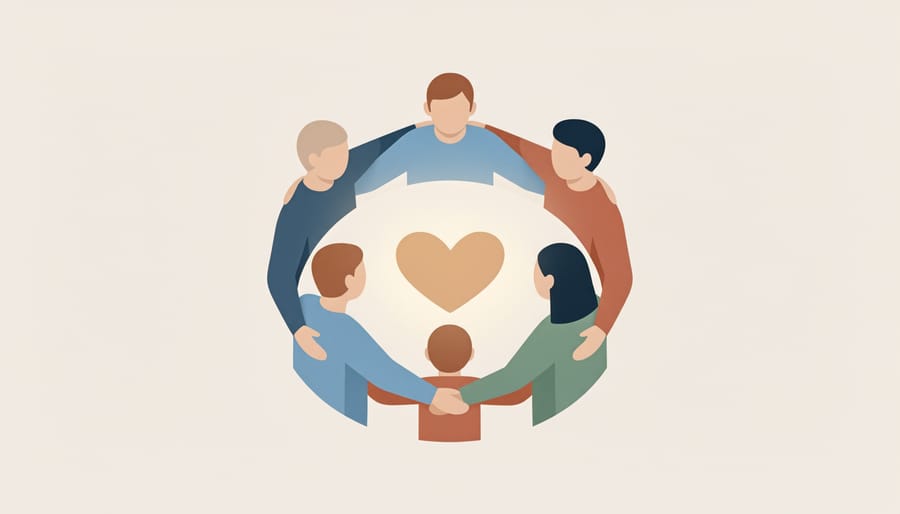
These love stories reveal something fundamental: queer relationships don’t exist in isolation. They’re sustained by networks of support, acceptance, and visibility that ripple outward into communities. When a couple in rural Alberta finds the courage to hold hands at the local farmers’ market, they’re not just living their truth, they’re quietly reshaping what their neighbors understand as possible. When a trans woman introduces her girlfriend at a family gathering in Halifax, she’s inviting everyone present to expand their vision of love.
The concept of chosen family emerges as a lifeline in nearly every narrative. Whether it’s friends who showed up to a wedding when biological relatives stayed home, or neighbours who became daily sources of affirmation when partners faced discrimination at work, these extended networks prove that family is defined by commitment, not genetics. This truth matters especially in communities where traditional support systems falter.
Visibility itself becomes an act of community building. Couples who share their stories, at Pride festivals, in local media, through workplace conversations, give others permission to exist openly. A teenager in Thunder Bay sees two women holding hands at a coffee shop and suddenly imagines a future for herself. An elder in Vancouver reads about a polyamorous triad thriving in Montreal and feels less alone in his own unconventional partnership.
These stories also remind us that acceptance isn’t binary. It’s a journey many people take at different speeds, and personal narratives help move that process forward. They transform abstract concepts into lived experiences, making it harder to dismiss LGBTQ+ relationships as something distant or theoretical.
Your Story Matters
Every love story adds a vital thread to the tapestry of acceptance we’re weaving across Canada. Your experiences, whether you’re navigating a new relationship, celebrating decades together, or supporting someone you love, deserve to be heard and can profoundly impact others who are searching for connection and hope.
Sharing your narrative creates visibility that extends far beyond your immediate circle. When you talk openly about your relationship, you challenge misconceptions, normalize diverse partnerships, and offer a lifeline to someone who might be struggling to imagine their own future. These personal accounts have historically driven social change more powerfully than any policy document, transforming hearts and minds one story at a time.
Do I need to use my real name when sharing my story?
Absolutely not. Many platforms allow anonymous or pseudonymous submissions to protect your privacy while still amplifying LGBTQ+ voices and experiences.
Where can I share my love story with the Canadian LGBTQ+ community?
Local Pride organizations, LGBTQ+ community centers, and digital storytelling projects actively seek personal narratives. Many also contribute to discussions around inclusive sex education and broader representation efforts.
Why does my individual story matter?
Your unique perspective fills gaps in representation and shows the beautiful diversity within LGBTQ+ relationships. Someone needs to hear exactly what you’ve experienced to feel less alone.
Connect with community archives, digital storytelling initiatives, and Pride festivals that feature personal narratives. Social media hashtags like #LGBTQLoveStories and #QueerCanada help amplify voices nationally. Your journey, with all its messiness, joy, and authenticity, contributes to a more inclusive future where every form of love receives the celebration it deserves.
These love stories remind us that acceptance isn’t built through grand gestures alone. It grows in the everyday moments couples share, the conversations families have around dinner tables, and the quiet courage of living authentically. Each relationship we’ve explored adds another thread to the vibrant tapestry of LGBTQ+ life in Canada, proving that love persists and flourishes even when obstacles seem insurmountable.
Every couple who holds hands in public, every family who celebrates their child’s partner, every elder who shares their journey with younger generations creates ripples that reach far beyond their own lives. These stories become mirrors for those still finding their way and windows for those learning to understand experiences different from their own.
The future of our community shines brighter because these couples chose visibility over hiding, hope over fear. Whether you’re in a decades-long partnership or just beginning to explore what love means for you, your story has power. It deserves to be told, celebrated, and shared. Together, we’re writing a collective narrative of acceptance that future generations will inherit, one love story at a time.